








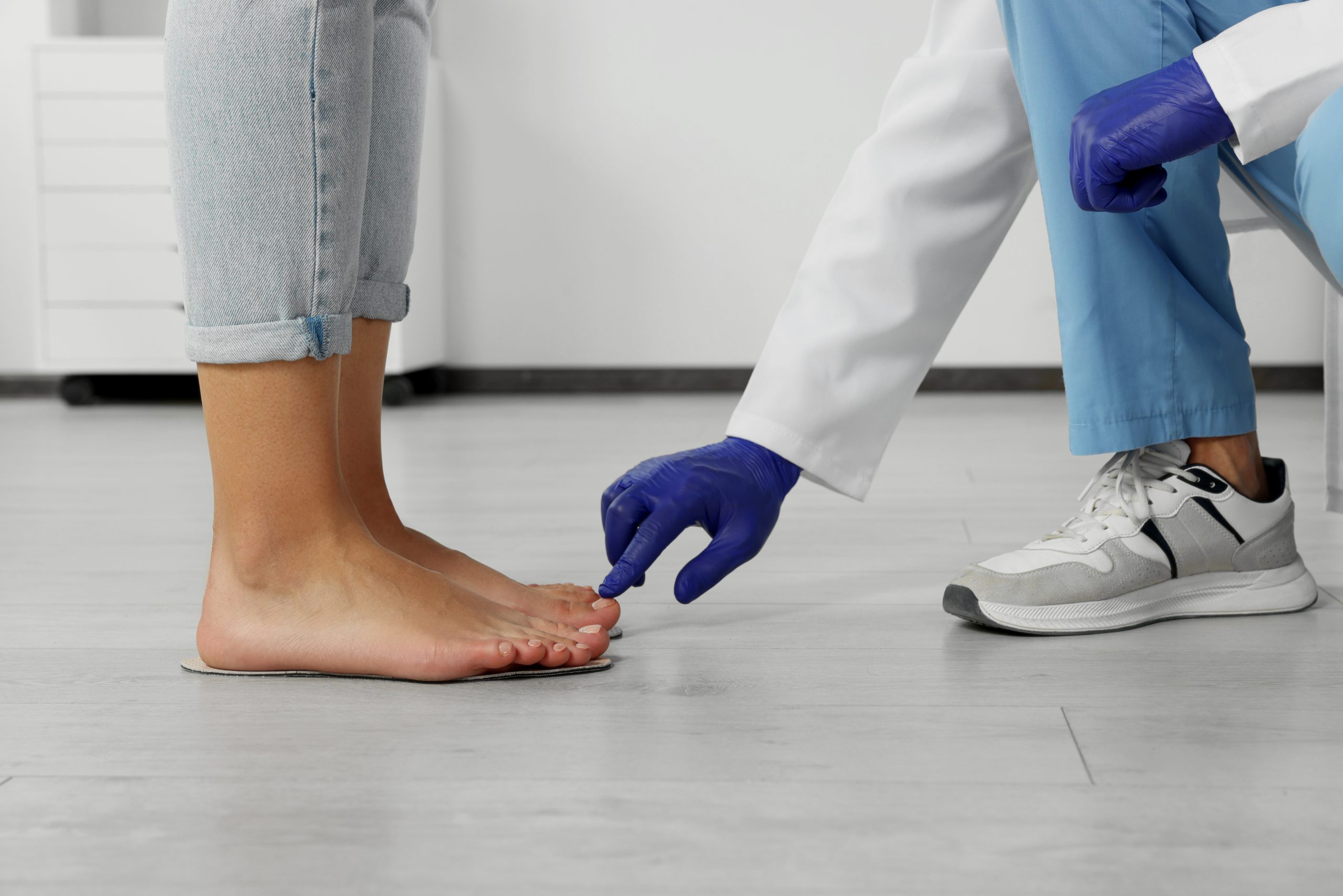

Childhood Gait Issues
Specialist assessment and care for in-toeing, out-toeing, knock knees, and other walking patterns that concern parents.
Children develop their walking patterns gradually, and many “unusual” gait patterns are entirely normal at certain ages. However, some patterns persist beyond expected developmental windows or cause pain, frequent tripping, or fatigue. These warrant professional assessment.
The feet point inward when walking or running. Causes vary by age:
Internal tibial torsion (twist of the shin bone)
Femoral anteversion (rotation at the hip)
Metatarsus adductus (curved forefoot)
Most cases resolve naturally, but persistent in-toeing causing tripping, awkward running, or pain should be assessed.
The feet point outward. Common in early walkers as part of natural development, but persistent out-toeing beyond age 3 may indicate:
The knees angle inward and touch while the ankles remain apart. This is a normal developmental phase between roughly ages 2 and 7. Concern is warranted when:
Most childhood gait patterns are part of normal development and resolve with time. Professional assessment is recommended when your child:
Why Early Assessment Matters
A child’s bones and joints adapt rapidly during growth. Catching a structural concern early allows the foot and leg to develop more naturally, often without invasive intervention. Just as importantly, an assessment provides peace of mind: many concerned parents leave with reassurance that the gait pattern is normal for their child’s age.
Many gait issues require reassurance and monitoring rather than active treatment.
When intervention is needed, it may include:
Most cases of in-toeing improve significantly by age 8. Persistent or painful in-toeing should be assessed.
Mild knock knees between ages 2 and 7 are usually a normal developmental phase. Severe, asymmetric, or persistent knock knees warrant assessment.
Frequent tripping beyond toddler years can indicate an underlying gait or strength issue and is worth assessing.
Many do not. The role of assessment is to distinguish normal development from patterns that benefit from active management.
If a gait pattern concerns you, an assessment is reasonable from around age 2 onwards. Earlier evaluation may be appropriate for asymmetric or pain-related patterns.
At Emerald Hill Podiatry, paediatric gait assessment is gentle, evidence-based, and parent-friendly. We provide clear written explanations of what is normal, what we are monitoring, and what would prompt further investigation. Parents leave with a plan, not just a verdict.
If your child’s walking pattern concerns you, an assessment provides clarity and a plan. Schedule a paediatric gait consultation to find out what is normal and what may benefit from attention.
By appointment only
Need Help? Chat with us