


Debridement
Sterile, painless removal of thickened skin, calluses, and damaged tissue.
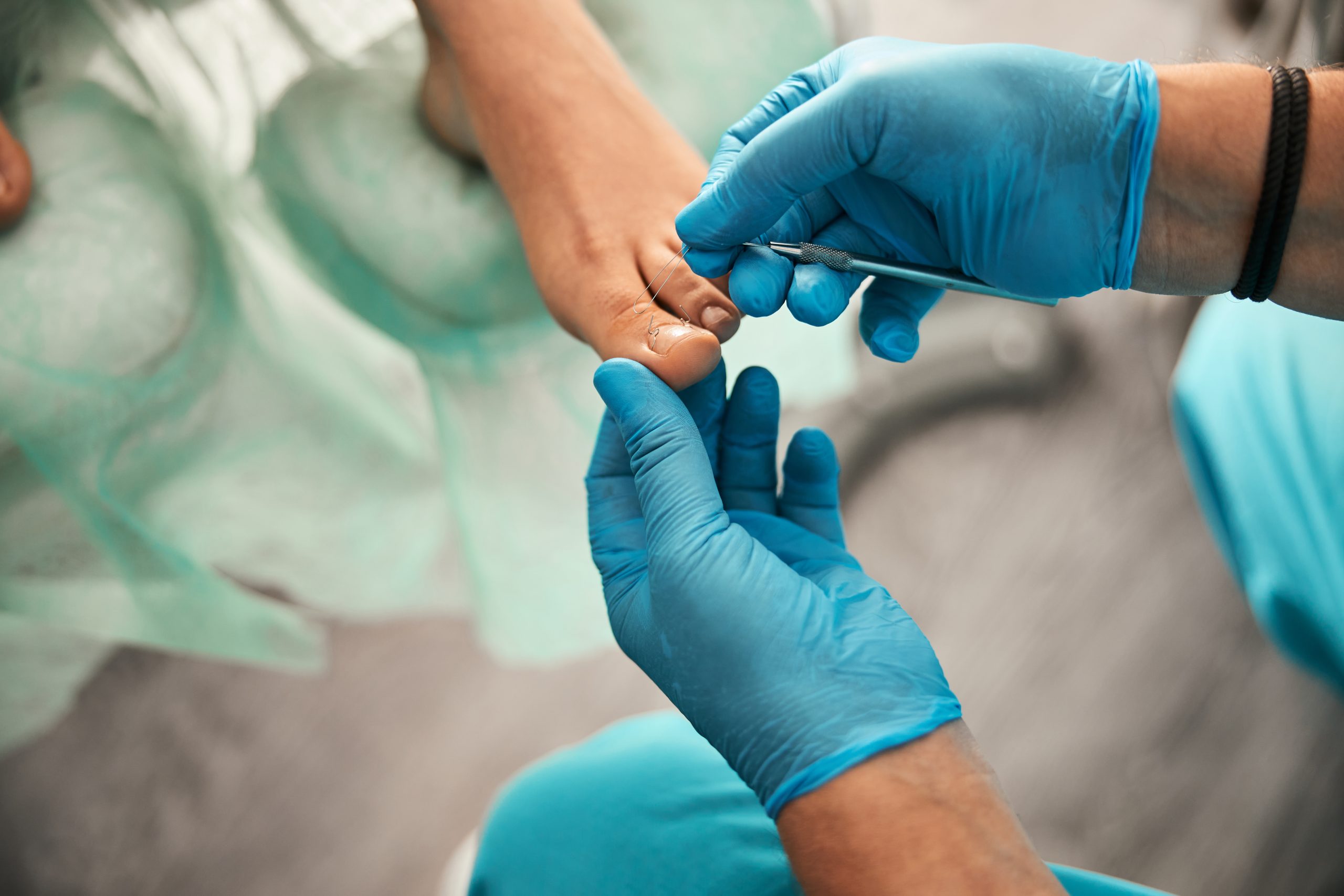
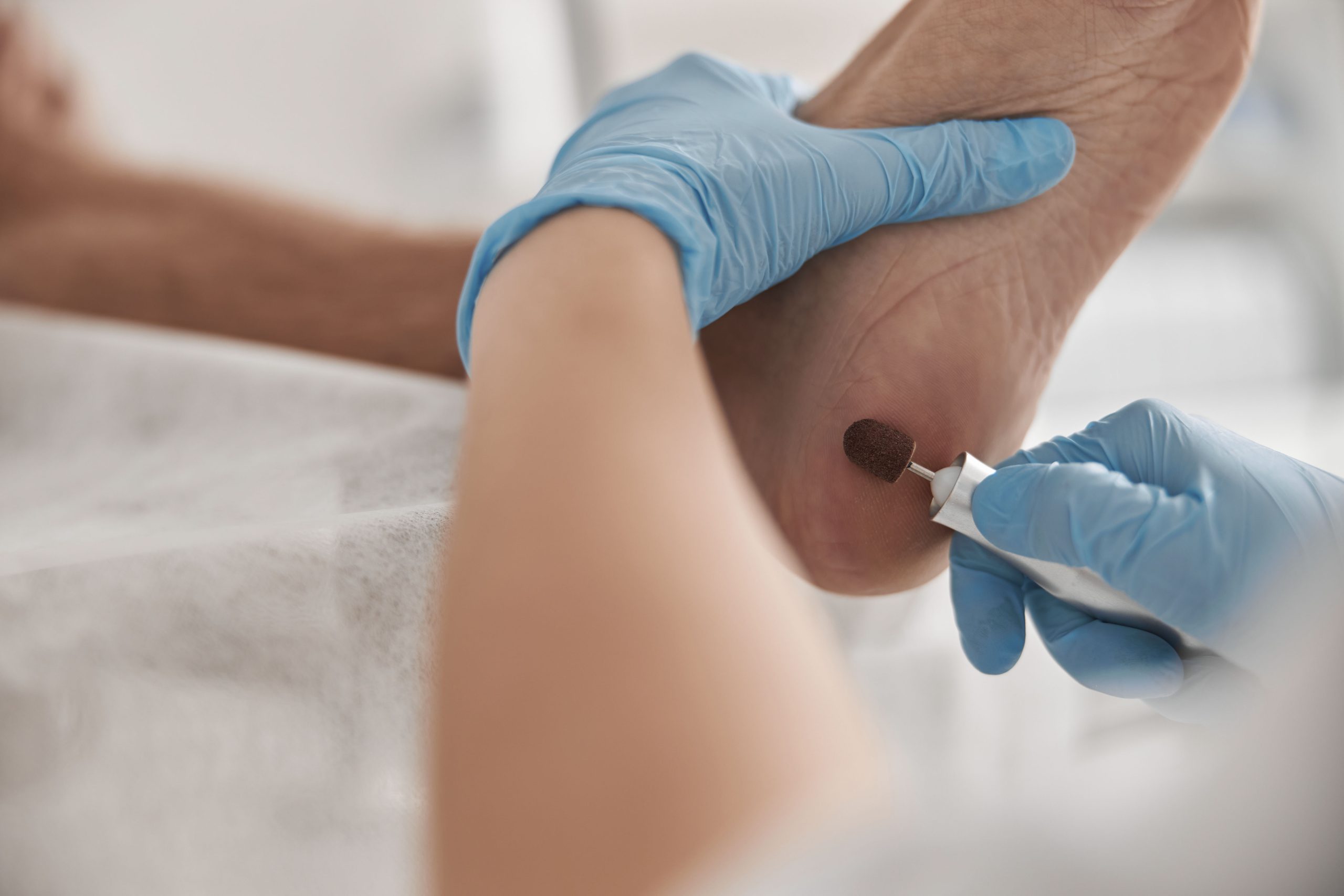
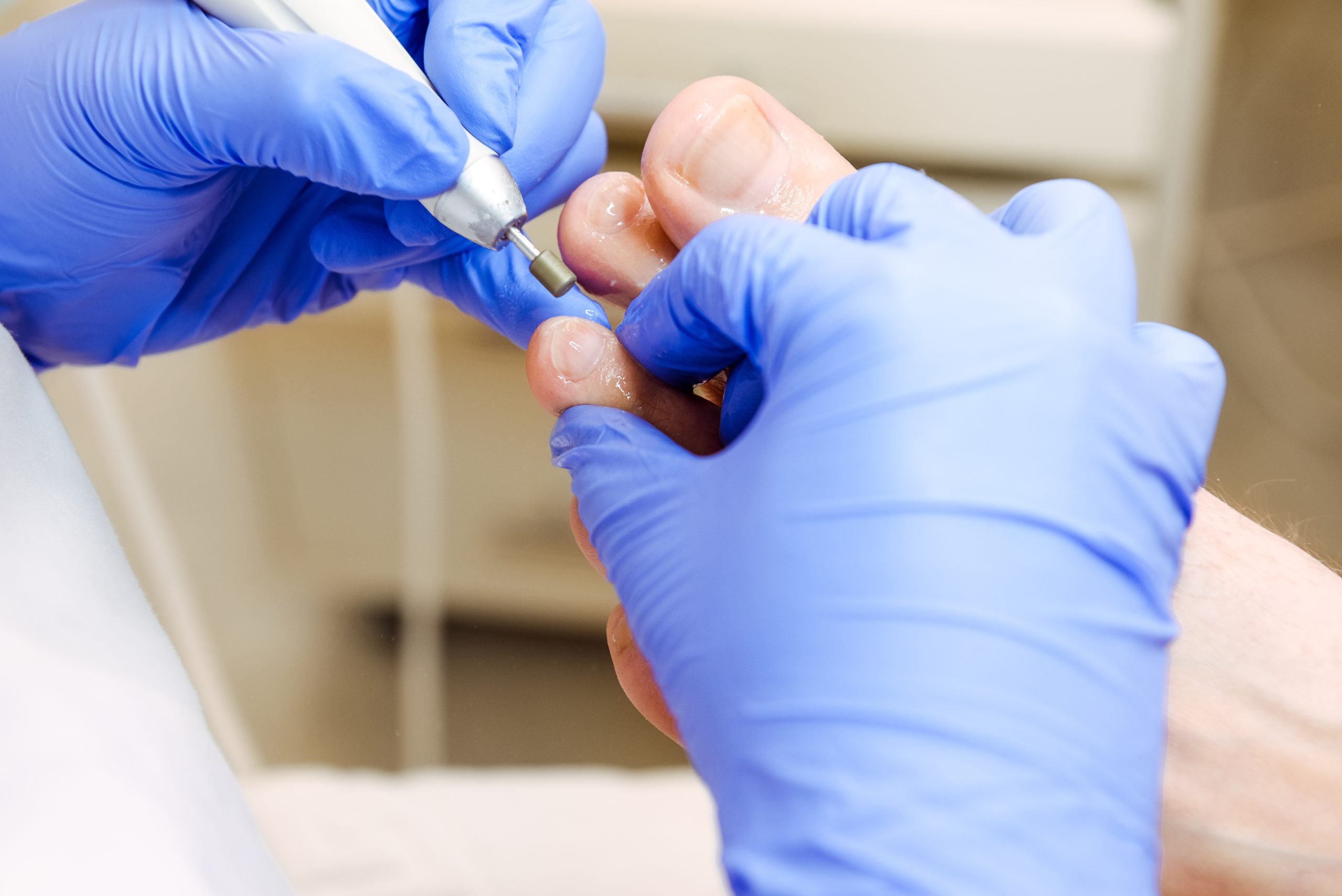
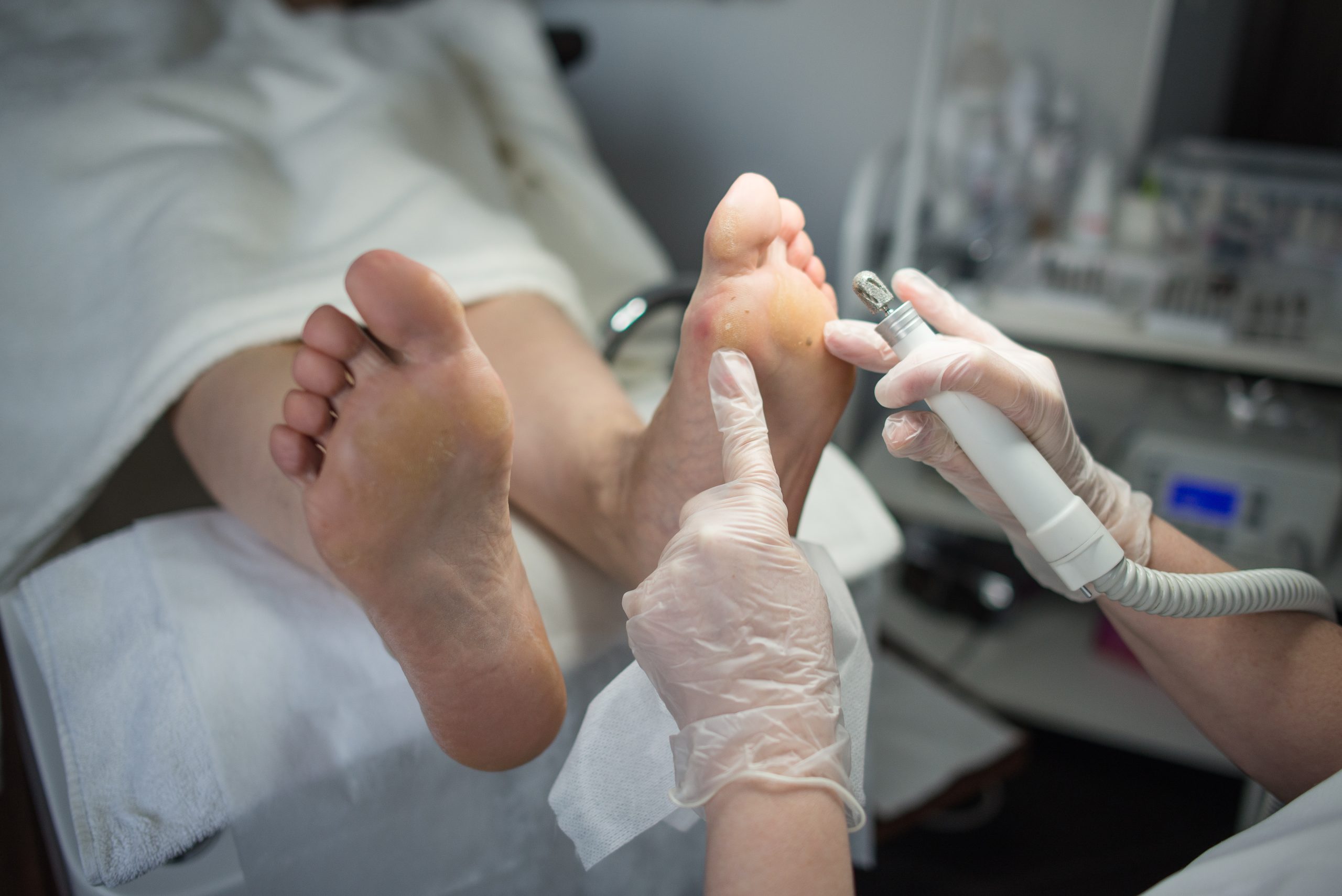
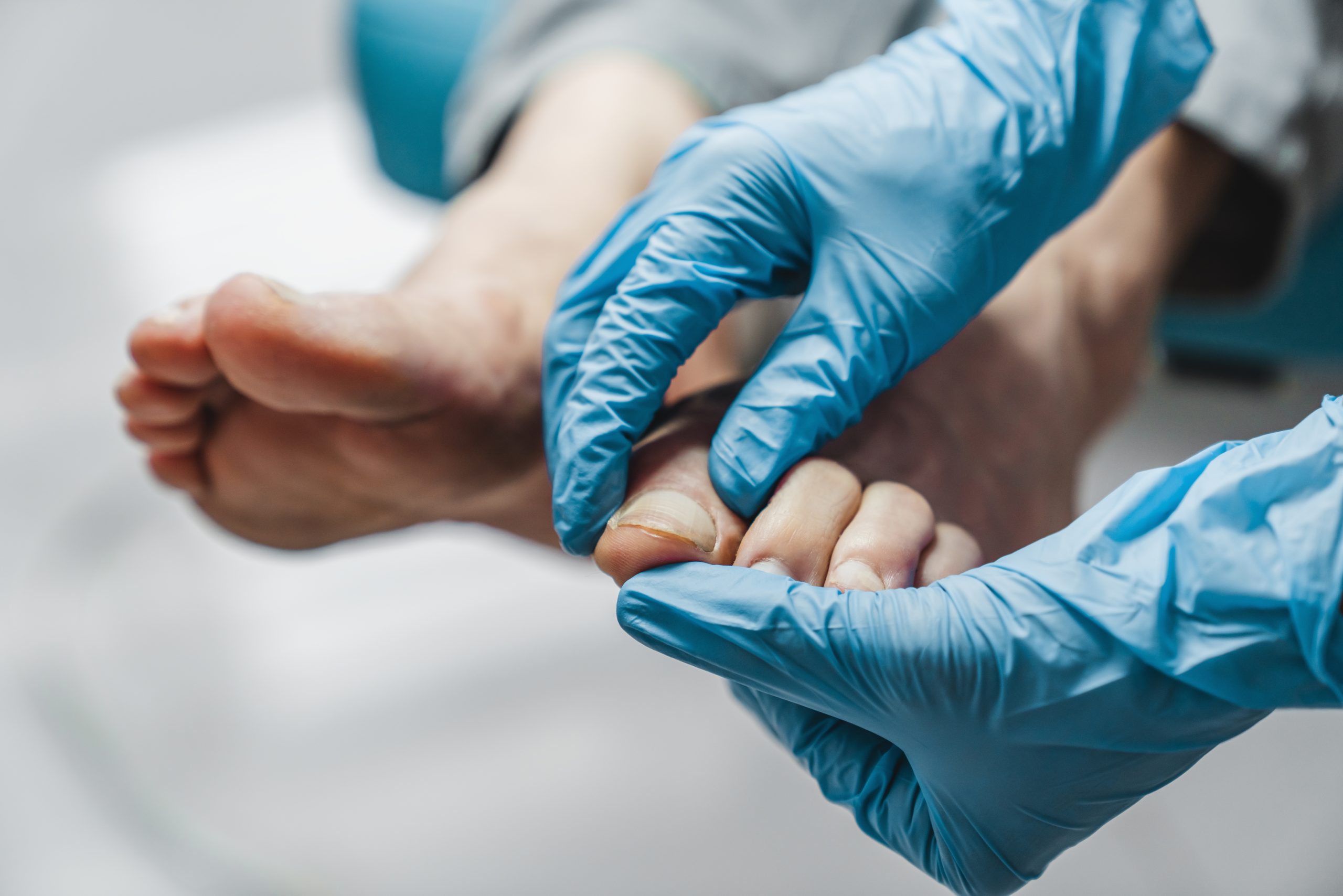
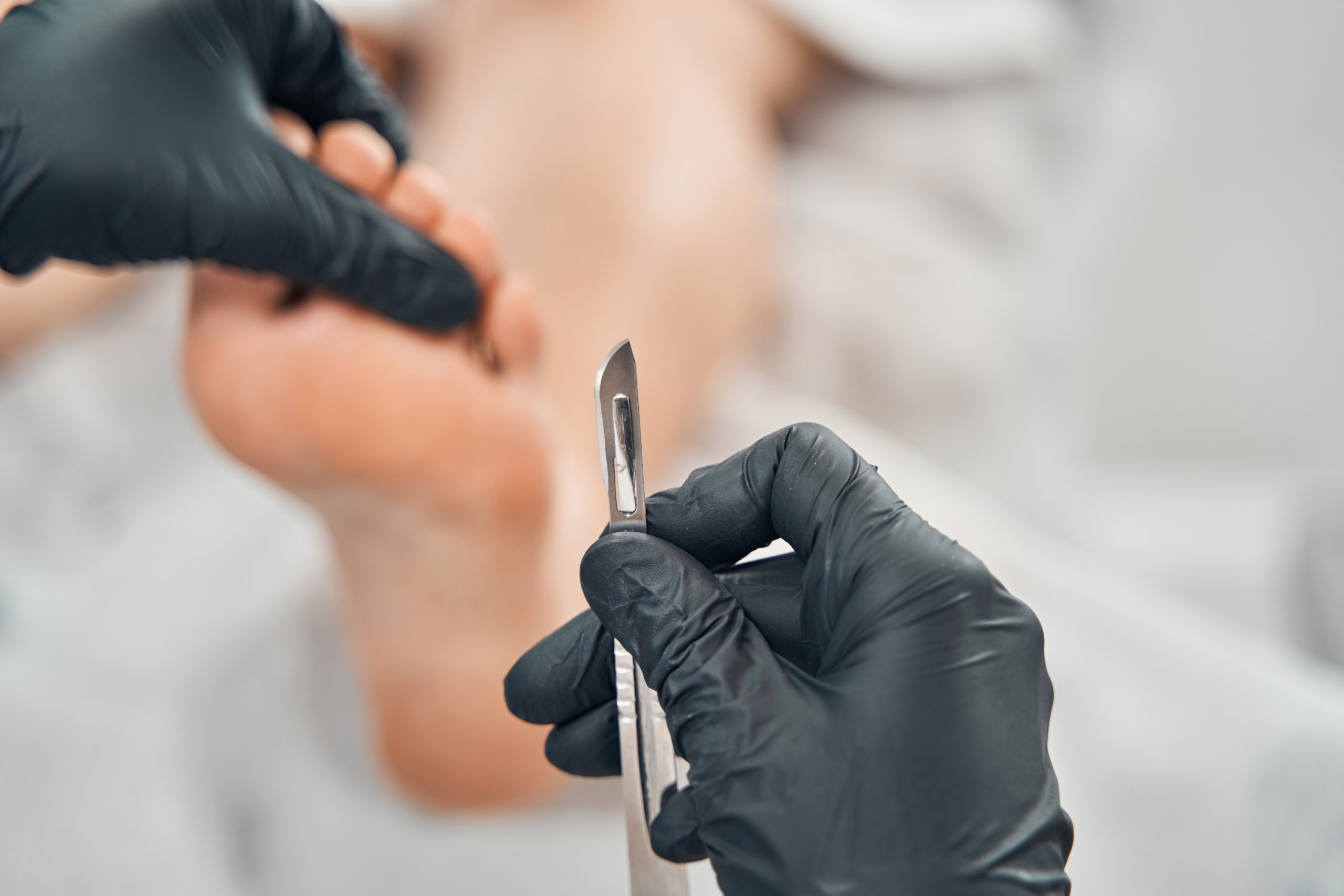
Debridement is the controlled removal of devitalised, thickened, or hyperkeratotic tissue using a sterile scalpel in a clinical setting. It is one of the most common podiatric procedures, and one of the most misunderstood.
Filing or pumicing at home reduces surface dryness but cannot safely remove the deep, painful core of a corn or the underlying pressure-loaded skin of a callus. Professional debridement does, and it does so with millimetre precision.
Clearance of thickened, hardened skin
The difference is not just convenience. It is precision, sterility, and safety, particularly for high-risk feet.
Precision
Surface abrasion only
Millimetre-level removal of devitalised tissue
Sterility
Bathroom or shower setting
Clinical, sterile instruments and field
Safety on insensate feet
High risk of unnoticed injury
Performed under clinician visual control
Diagnostic value
None
Reveals pre-ulcerative changes hidden beneath calluses
Duration of relief
Days
Typically 6 to 12 weeks
Suitable for diabetics
Generally not recommended
Routinely performed within diabetic foot care
For patients with reduced sensation, poor eyesight, or limited mobility, professional debridement is not a luxury. It is the safer standard of care.
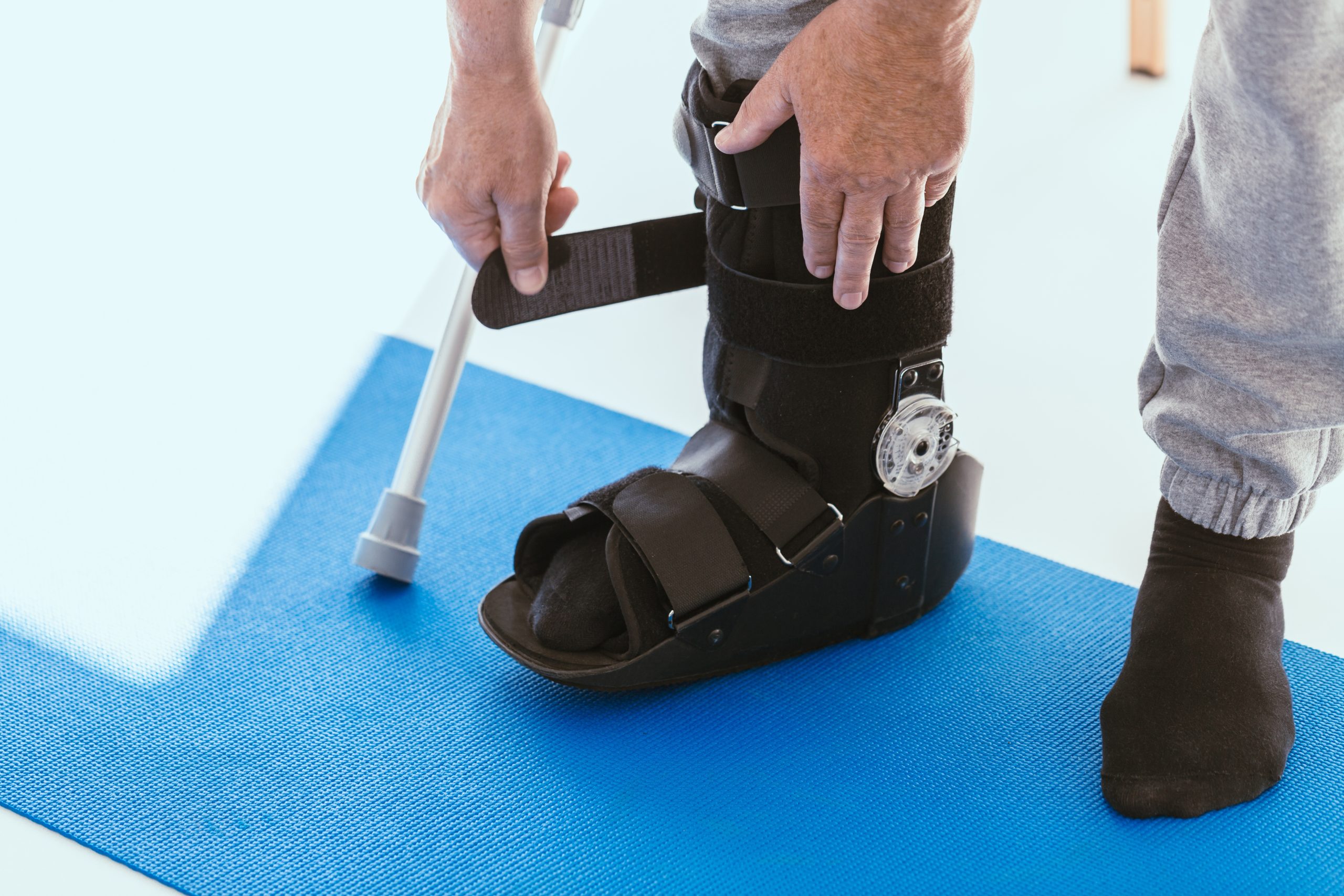
The distinction matters because patients are often prescribed an AFO after standard orthotics have stopped delivering enough correction.
For patients with reduced sensation, poor eyesight, or limited mobility, professional debridement is not a luxury. It is the safer standard of care.
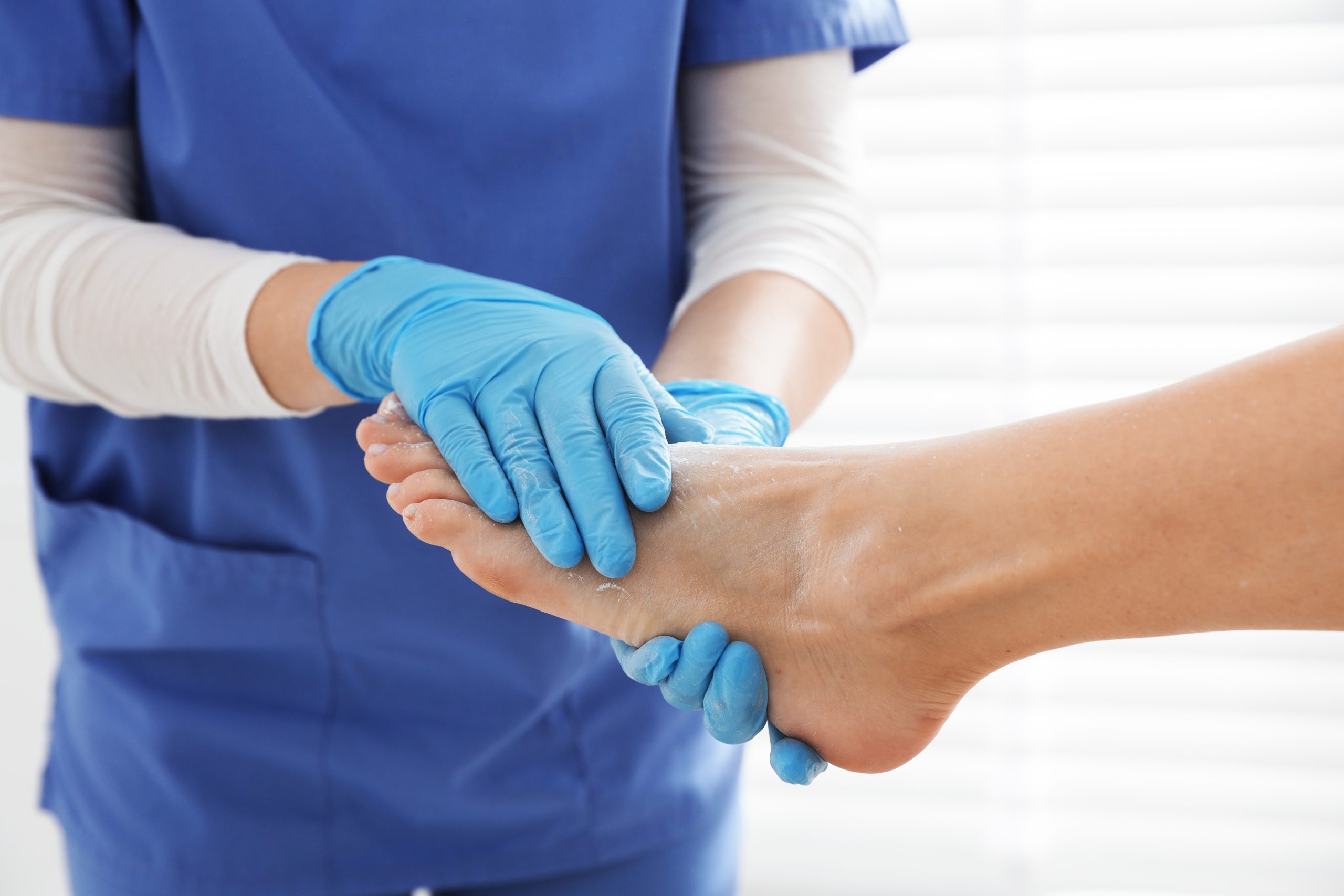
The lesion and surrounding skin are examined for size, depth, pressure cause, and any signs of pre-ulceration.
The thickened tissue is removed with a sterile scalpel under direct visual control, taking care to preserve healthy skin.
If the lesion is pressure-driven, padding, offloading, or footwear adjustments are recommended to slow recurrence.
Written aftercare instructions and a recall date, typically every 6 to 12 weeks for recurrent lesions.
A Real-World Note on Why This Matters
In a large retrospective study (Wilcox et al., JAMA Dermatology 2013, more than 150,000 wounds analysed), more frequent professional debridement was strongly associated with faster wound closure rates. The same principle applies to pre-ulcerative calluses: removing the pressure load prevents the wound from forming in the first place.
At Emerald Hill Podiatry, every debridement session is performed by a Doctor of Podiatric Medicine. This matters because a callus is rarely just a callus. It is a signpost to a deeper biomechanical, footwear, or systemic problem. Our clinicians use each session as a diagnostic opportunity, not just a tidying-up exercise.
Painful corns and recurrent calluses rarely improve on their own. Schedule a session for safe, immediate relief and a plan to slow recurrence.
By appointment only
Need Help? Chat with us